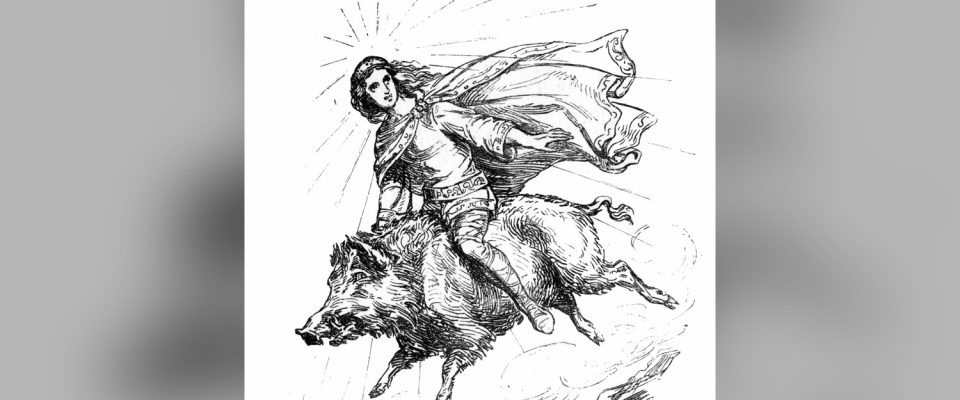
The Vanir gods are a family of gods in Norse mythology set apart from the Aesir. The sources name Njord and his children, Freyr and Freyja, among them. They tie the Vanir to wealth, the sea, good harvests, and magic. They also say the two families once fought a war.
Who were the Vanir?
The Vanir are a kind of being of their own in the poems, not a branch of the Aesir. First of all, one name needs explaining. Henry Adams Bellows translated the Poetic Edda in 1923. His translation of the poems, quoted on this page, calls the Vanir “the Wanes.” His introduction explains the name: “the Vanir, or, in Anglicized form, the Wanes.” As a result, a reader who meets the Wanes below has met the Vanir.
In the Skírnismál, for example, Gerth asks the messenger Skirnir, “Art thou of the elves or the offspring of gods, Or of the wise Wanes?” In other words, elves, gods, and Vanir are three answers to one question.
The poems also give the Vanir their own words. In the Alvíssmál, men, gods, Wanes, giants, and elves each have their own word for the earth. To the Wanes, the earth is “The Ways” and the sea is “The Wave.” Similarly, heaven, to them, is “The Weaver of Winds.”
Which gods are Vanir gods?
To begin with, three names are certain: Njord and his two children. Snorri Sturluson’s Prose Edda, in Arthur Gilchrist Brodeur’s 1916 translation, is plain about it. “Njördr is not of the race of the Æsir: he was reared in the land of the Vanir.” His list of poetic names for Njord includes simply “Wane.” Freyja, in his words, “is also called Lady of the Vanir.”
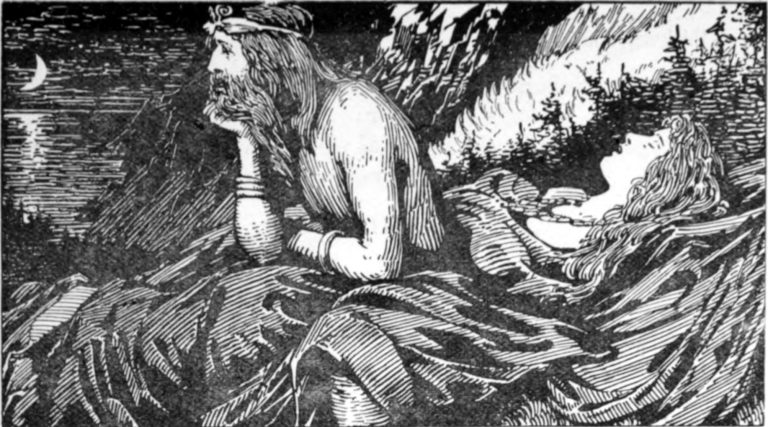
Beyond these three Vanir gods, however, the record thins. The Ynglinga saga, in Samuel Laing’s 1844 translation, adds Kvasir, “the wisest man” of the Vanir. Bellows also guessed at Gullveig (he writes Gollveig), the woman at the start of the war. She was, he wrote, “apparently the first of the Wanes to come among the gods.” Still, that is his reading, not a line from any source. He admitted the limit, too: “Beyond this we know little of the Wanes.” None of the texts read for this page gives a full list.
What were the Vanir gods of?
In Snorri’s account, the Vanir gods Njord and Freyr bring plenty. For example, Njord “rules the course of the wind, and stills sea and fire.” Men call on him “for voyages and for hunting.” He is rich enough to “give them great plenty of lands or of gear.”
Freyr, his son, rules “the rain and the shining of the sun, and therewithal the fruit of the earth.” According to Snorri, it is good to call on him “for fruitful seasons and peace.” Likewise, Snorri’s list of poetic names for Freyr agrees. It includes “God of the Fertile Season.”
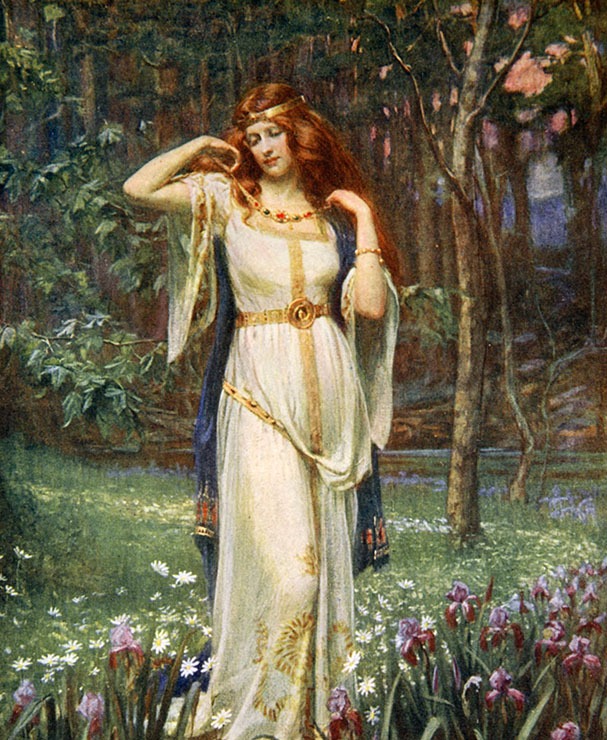
Freyja, finally, has a hall and a gift of her own. Snorri gives her the hall Fólkvangr. Wherever she rides to battle, “she has one-half of the kill, and Odin half.” The Ynglinga saga credits her with a second gift. She “first taught the Asaland people the magic art, as it was in use and fashion among the Vanaland people.” In short, that magic is seiðr.
One poem, in fact, hints at foresight as well. In the Þrymskviða, Heimdall “knew the future well,” just “Like the Wanes.” However, Bellows noted that the Vanir “are not elsewhere spoken of as peculiarly gifted with knowledge of future events.” One line, then silence.
What do the sources say about the war with the Aesir?
The Völuspá calls it “the first in the world.” It begins when the gods strike Gullveig with spears and burn her: “Three times burned, and three times born.” Next, Odin throws his spear over the host. In stanza 23, “The wall that girdled the gods was broken, And the field by the warlike Wanes was trodden.”
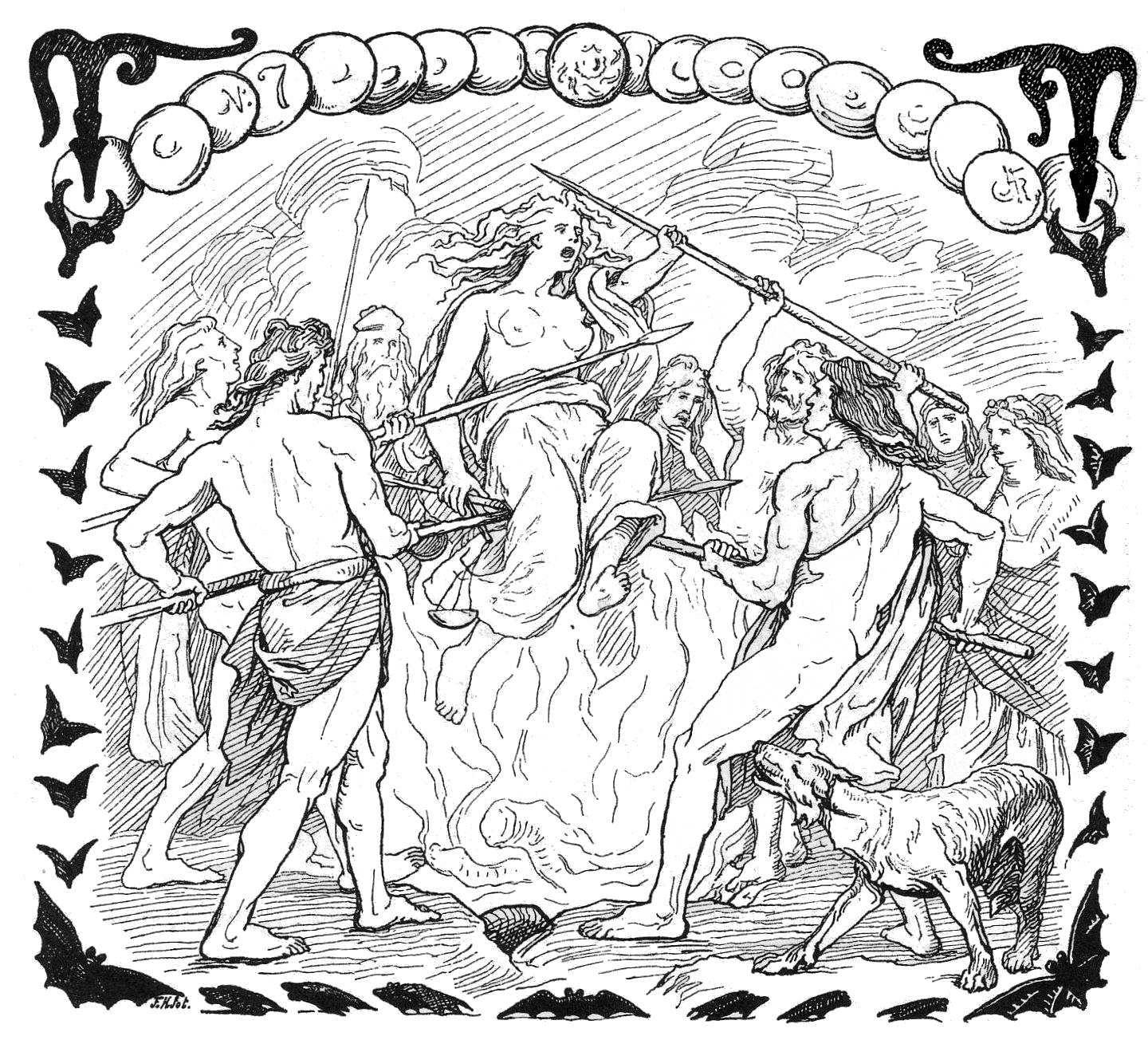
However, the stanzas do not name a winner. Bellows read stanzas 23 and 24 as “the victory of the Wanes.” After it, the gods debate “Whether the gods should tribute give, Or to all alike should worship belong.” The Ynglinga saga, on the other hand, tells it as a stalemate in which “victory was changeable.”
In the end, both the Gylfaginning and the Ynglinga saga tell of an exchange of hostages. The Gylfaginning has Njord given to the gods, and Honir sent the other way. The Ynglinga saga sends Mimir along with Honir, and the Vanir send his head back; his story has its own post. Snorri’s other account seals the peace with spittle in a vat, and from it the gods shape Kvasir. Therefore, in one book Kvasir is a hostage, and in the other he is made from the truce.
Where is Vanaheim?
Vanaheim is, above all, the home of the Vanir. The texts read for this page describe no hall, no hill, and no shore there. In fact, the poems and Snorri’s Edda name it only as the Vanir’s home. The Vafþrúðnismál says only that Njord was made there and will go back. “At the fall of the world shall he fare once more Home to the Wanes so wise.”
The Ynglinga saga, by contrast, does something different. It treats the gods as people of a real country, Vanaland, beside a river “properly called by the name of Tanais.”
What is the difference between the Aesir and the Vanir?
The sources show three differences. First of all, the Vanir are tied to wealth, harvest, and the sea. Second, they also brought a magic the Aesir had to learn from Freyja. Third, and most clearly, their customs differ. The Ynglinga saga says Njord had married his own sister, “for that was allowed by their law.” Among the Aesir, however, “it was forbidden to come together in so near relationship.”
That last point is where the sources disagree. In the Lokasenna, Loki taunts Njord: “With thy sister hadst thou so fair a son.” Snorri’s Gylfaginning, by contrast, says Njord “begot afterward” Freyr and Freyja in Nóatún, among the gods. Bellows noticed the clash and, for that reason, put it in a note. In the end, both versions stand.
Common confusions about the Vanir gods
Freyja and Odin. The God of War games make Freyja “a Vanir goddess” and the “ex-wife of Odin.” In Snorri, however, Freyja “is wedded to the man named Ódr,” and Odin’s wife is Frigg.
The Vanir vanish after the war. They do not, in Snorri’s telling. In his chapter on the goddesses, he writes that “certain of the Vanir” watched the goddess Gná ride through the air.
Vanir gods FAQ
They are a family of gods set apart from the Aesir. The sources name Njord, Freyr, and Freyja, and the Ynglinga saga adds Kvasir.
She is the daughter of Njord, and Snorri calls her Lady of the Vanir.
The Völuspá stanzas do not name a winner. Bellows read it as a Vanir victory, and the Ynglinga saga calls it a stalemate that ended in a truce.
Wanes is the Anglicized form of Vanir. Bellows used it in his 1923 translation of the Poetic Edda.
Read next. For how the two families fit together with the giants, see the Aesir, the Vanir, and the Jötnar. The previous explainer in this series covers Ginnungagap, the void before the world.
Sources
- Snorri Sturluson, The Prose Edda, Gylfaginning, translated by Arthur Gilchrist Brodeur (New York: American-Scandinavian Foundation, 1916), read it on Wikisource
- Snorri Sturluson, The Prose Edda, Skáldskaparmál, translated by Arthur Gilchrist Brodeur (New York: American-Scandinavian Foundation, 1916), read it on Wikisource
- Snorri Sturluson, Heimskringla, Ynglinga saga, translated by Samuel Laing (London: Longman, 1844), read it on Wikisource
- The Poetic Edda, Völuspá, translated by Henry Adams Bellows (New York: American-Scandinavian Foundation, 1923), read it on Wikisource
- The Poetic Edda, Vafþrúðnismál, translated by Henry Adams Bellows (1923), read it on Wikisource
- The Poetic Edda, Lokasenna, translated by Henry Adams Bellows (1923), read it on Wikisource
- The Poetic Edda, Skírnismál, translated by Henry Adams Bellows (1923), read it on Wikisource
- The Poetic Edda, Þrymskviða, translated by Henry Adams Bellows (1923), read it on Wikisource
- The Poetic Edda, Alvíssmál, translated by Henry Adams Bellows (1923), read it on Wikisource
- PlayStation, God of War cosplay guides (the game publisher’s description of its Freyja, cited for the pop-culture note only)